Sunday, 3 November 2013

Micro Features: Sound

There is important terminology when it comes to describing sound in film. Sound plays an imperative role in films, and could potentially set aside a good film and a bad film. They did exposition to explain situations as they are focusing on action instead of words; it creates a particular atmosphere they want the viewer to experience.


Alfred Hitchcock is famously known for using sound well and appropriately. The high pitched tone in "Psycho" whenever the killer is introduced is a classic sound effect. Films with just dialogue miss a certain touch which makes a film brilliant. With sound, you're enable to feel emotion, a way in which dialogue alone could not fully help you reach that emotion the director wants. Same way with just music alone. The mix of the two together creates a picture containing qualities which does not just illustrate a film, but tell a story.


Did that scare you?

Both diegetic and non-diegetic terminology are commonly used.

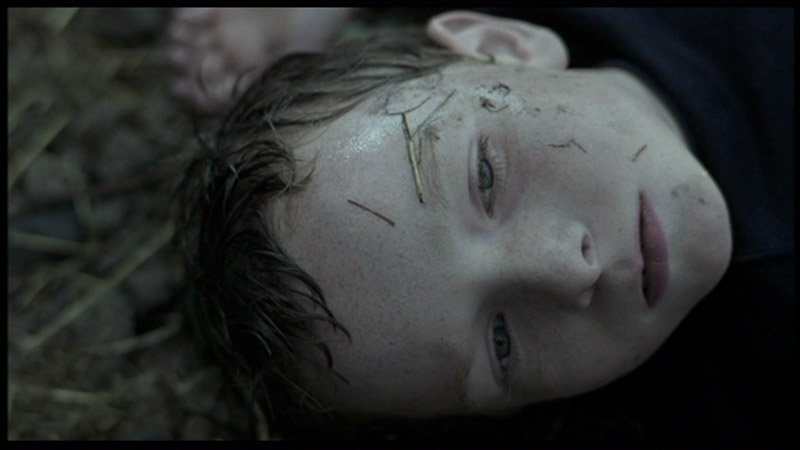
Diegetic sound occurs when the character hears the same sound we are able to hear; referring to the world of texts. This includes voices of characters, objects in the film, music coming from that story space (source music). Another term for diegetic sound is actual sound originated from the film's world. Ratcatcher includes other diegetic sounds such as glass shattering, screaming, grunting and breathing to follow the thriller theme. Non-diegetic refers to the outside word of the text; the sound is not visible on the screen. Examples of this includes, the narrators commentary, sound added for dramatic effect, mood music and voice overs. The Ratcatcher's background music (mood music) involves a deep bass, with a low to which gradually speeds up with added low strings and violin. The Ratcatcher does not have much non-diegetic sounds to emphasises the way the film maker wants us to see. It makes the audience feel close to reality, as if we are really there with the characters. It does not have the sort of glamorised Hollywood sheen added to it like in most American films.

"Brilliant… Wholly original… Completely mesmerizing."

Also, there is on and off screen sound. With on screen sound, the audience can see the source if the sound. However with off screen sound, the audience cannot see the source of the sound. Off screen sound enables the extension if the diegetic world. When watching, Butch Cassidy and The Sun Dance Kid, the on screen sounds included, the talking, sound of the wind and the horses. On the other hand, the off screen sounds were the low rumbling. A sound bridge helps create a smooth transition, from one scene to another. 

Parallel sound comes from the idea of the action matching the sound directly, however contrapuntal pursues the complete opposite; not matching the action.  For e.g in Jaws, the beach is suppose to represent strong elements of enjoynent, therefore the audience would expect happy, upbeat music or even relaxing, calm music. However, the music does not fit at all and creates a perculiar, scary tone therefore it is contrapuntal. 


It enhances the film's motive; to frighten.


Friday, 1 November 2013

Camera editing exercise & Evaluation


The storyline follows a young, paranoid woman who is being followed by something unknown, a ghost perhaps. A story board was planned before hand, which included rough sketches and a couple sentences to sum up what was going to happen in each shot. In addition, the shots had to be filmed over a period of two days because of the shortage of time and limitation in the equipment. For example, the battery died and the camera was having problems filming our full shots.

Due to the lack of recourses there were some shoes that could not be attempted. This was a limitation when it came this camera angle exercise. If we had more technical equipment we could potentially able to peruse a range of camera techniques. Additionally the over the shoulder shot was not included because it was overlooked.

The first shot taken was the long shot which involved the paranoid, your woman running toward the camera. This enabled the actress to appear as if she was running for a longer length which allowed a smooth transition to the next shot. In addition, the second shot was the woman looking anxiously around herself while the unknown supposed phantom walks in the complete opposite direction, this increased tension as she did not know this. This was shot at a medium angle. The third shot invalided a close up to enhance the tension already previously installed in the audience. The audience are able to follow the anxiety the main character is feeling. Moreover, the fourth shot was a medium close up which enabled for the audience to notice the growing nervousness of the young woman's face and body. After that, the fifth shot was the short extreme close up which showed the characters back to add a real sense of mystery. This follows to the sixth shot which includes the main actress going down a set of stairs which leads to the point of view. The next shot was supposedly the pan shot however the whole of the surroundings were not panned therefore it was not a complete success. Lastly, the high angle shot was taken to illustrate people walking which made them appear smaller and their surroundings lather. 

Furthermore, when it came to the editing the shots, a number of mistakes were made since we were not familiar so familiar with the camera techniques at such a level. At times, the shots were not particularly steady there the video does shake at times, which looks rather unprofessional. However, the shots were taken accordingly but could of been improved. An example includes when the actress was running; the camera was at a positions where the face was cut off. If there was more time, redoing the shot to make it perfect would've been ideal. 

All in all, the camera techniques were successful in the sense that they were taken to the best of our abilities as beginners. The shots always transitioned into loving shots so the shots were able to appear smoother. In addition, to removing irrelevant footage of what we may of filmed and kept the shots relevant. 

In order to make better footage next time, there are aspects that need to be improved. For example, it is essential that the camera is steady in order to make the footage appear more professional. When it comes to editing, what needs to be taken into consideration is that we prepared the footage in order for us to work more quickly and efficiently. Also, if there was more time we would've attempted to try and include all possible shoes such as over the shoulder. 

Micro Feature: Cinematography (shot type/camera movement)

There are various camera techniques used when it comes to filming. In order to produce a fantastic film, you cannot simply just use the same, limited techniques throughout a film. What makes a film brilliant is not just the acting, but the way its filmed and the techniques cleverly used.

The following are some camera techniques:

Long Shot (LS)


Medium Shot (MS)


Close Up (CU)


Extreme Close Up (ECU)


Point of View (POV)


Over the Shoulder 


Low Angle


High Angle


Pan


Tilt


Crane Shot


Tracking Shot


Rolling Shot 

Monday, 21 October 2013

Macro Features: Genre and Narrative

When it comes down to technical components for film, they are divided between macro elements and micro elements. Genre is able to classify films by their unique characteristics which makes them different from other types. 
There are many genres such as:

  • Action
  • Adventure
  • Comedy
  • Drama
  • Crime & Gangster
  • Epics/Historical
  • Horror
  • Musical/Dance
  • Science Fiction
  • War
  • Western
  • Romance
A common example includes "RomCom" or also known as "Chick Flick." This is favored by mostly females, as they contain a not so typical love plot which includes comedic elements to it and a most likely happy ending, however sometimes if they director wants to create a twist; they could include a peculiar love match just to surprise the audience. In most cases one of the main characters or both tend be good looking to attract rather mainstream audiences. The music in the background are normally modern music and occasional classical music to fit the mood or scene.

(Friends with Benefits)


Narrative is the way a sequence of events are revealed to an audience. An example of this is 500 days of Summer.  The first time Tom Hensen sees Summer Finn, he falls for her; you could say this was love at first sight. However this was unrequited love as he later finds out that the love he has for her wasn't returned as she had fallen for someone else despite saying she does not believe in true love. The film shows altering days that he spent with her and without, the narrator telling the story in the background reminisces by going back to different days, not necessarily in order. The film decides to show the audience particular days, not all; which is an interesting technique used throughout the film making industry. This is called non-linear as the sequence of events are revealed in an unexpected order, another example of this is pulp fiction. On the other hand, linear us the sequence of events revealed in order; beginning, middle and end. This is the most popular theme used in the film making industry.


(500 days of Summer)


Welcome!

Hola! Welcome to my blog


...Let the Media Magic begin.